
AI-trending Ourselves Into Climate and Anti-intellectualism Catastrophe?

You know what? I can’t remember when I first started learning more about AI or when I started recognising its widespread use; I only know how I feel about it now. (Derogatory, that’s how.) After the recent boxed action figure and Studio Ghibli-style character ‘trends’1, I thought I’d take a moment to talk about AI and why I am staunchly against using it for any sort of creative endeavour and then some. In fact, I even ended my Instagram break in order to rant about Generative AI for six whole Stories. It was some of my best work yet, if you ask me.
Artificial intelligence has been around for decades: it’s widely thought that it can be traced back to Alan Turing’s groundbreaking Turing Test in the 1950s that paved the way for AI research. So, it’s nothing new, as such. Like in any field, there are plenty of examples of its use for good, too. In 2004, Hong Kong’s MTR system deployed the ‘AI Engine’ that provides a single system to schedule and manage all engineering works across all railway lines, thus giving teams more time to perform ‘more engineering works with its existing resources’. In 2022, climate researchers used AI to build a digitised visual of the potential future effects of floods, wildfires and other weather circumstances. The data and visuals generated provided researchers with key information that could improve climate decision-making, monitor thick and dense forests, and attempt to mitigate the worst effects. So, don’t get me wrong, I do believe there is a place for AI, especially in our overpopulated, capitalism-ridden world.
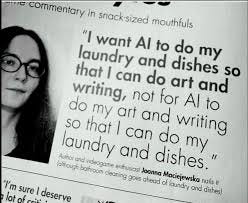
Yet, Generative AI has seen a sharp increase in use and popularity in recent years. These models learn from existing art, content and works to generate new versions created by artificial intelligence. As a writer by trade and an aspiring novelist by everything else, I am of course very much against Generative AI. I’ve turned off permissions pretty much everywhere that I can think of, and now I spend plenty of time telling others to do so too. Surely, AI is great for many things, but to replicate artists and creatives’ work isn’t one of them? I want AI to wash my dishes and load my laundry in an effective, timely manner, not take away the creative joys from my life.
The impact of AI on water use and the environment
Did you know? Every time somebody uses ChatGPT to chat to a robot how their day is going, say 10 or so questions and replies, about two litres of water is consumed. According to Forbes, it’s estimated about nine litres of water evaporates per kWh of energy used to cool data servers used for generative AI products. Add to that the fact that burning fossil fuels is how we generate the energy, and it’s clear: AI is contributing negatively – and – hugely to global warming.
The global average temperature has already surpassed the 1.5°C threshold tabled by scientists and, in fact, 2024 was the first year of doing so2. We’re now (devastatingly) on track to reach as high as 1.9°C by 2028, undoing all of the work of the Paris Agreement and sending ourselves into a dizzying spiral towards climate catastrophe. It’s no news that we’re heading into climate catastrophe and with water being one of our most precious commodities, why are we all being pushed to let AI plan our meals, or draw us as an action figure, or reply to a message when we have entire unique brains, talent artists, and freedom of speech at our disposal?
Are we losing our critical thinking skillset?
I still remember the first time a colleague excitedly told me that they used ChatGPT to reply to emails because it meant they didn’t have to think about it themselves. Now, I know I’m a copywriter by trade, but I thought: ‘How bizarre that you can’t respond to a simple message of your own volition?’ Next, a friend told me that they spent their whole evening speaking to ChatGPT as though it was a friend. They spilled secrets and asked what they should have for dinner. I was sad that they didn’t consider me a good portal for those things, and shocked at this brazen waste of at least several litres of water! Another who wants to start an art shop happily generated Studio Ghibli-inspired art, action figures, Pixar-style movie posters, and more – crafted using other artists’ work instead of opening a sketchbook or Procreate to create something of their own. And, others use ChatGPT to write essays, make meal plans, digest emails, bypass a Google Search (RIP all the SEO work I’ve been doing for my blog and Substack). If I’m honest, I think we’re at dire risk of losing our critical thinking skillset. We’re losing the patience to do anything that takes longer than a few seconds, God forbid it eats into watching 500 short-form videos in an hour. We’re raising a generation of young people studying to become doctors, lawyers and other professions, who use artificial intelligence to piece essays together. Are we really not even using our own voices and freedom of speech to reply to an email?
The rise of AI takes up far too much of my mind these days, but I do vow to write my own messages to friends, make naïve attempts at drawing, spend a whole 15 minutes peeking at my fridge to write a meal plan, and sit at my laptop for hours to craft essays and stories and poems and novels with my one little, magical, human brain.
What a wild thought, eh?
- Further reading here, if you missed the controversy and you’re interested in Hayao Miyazaki’s response: https://apnews.com/article/studio-ghibli-chatgpt-images-hayao-miyazaki-openai-0f4cb487ec3042dd5b43ad47879b91f4#:~:text=Josh%20Weigensberg%2C%20a%20partner%20at,’%E2%80%9D%20he%20said. ↩︎
- Source: https://climate.copernicus.eu/copernicus-2024-first-year-exceed-15degc-above-pre-industrial-level#:~:text=Each%20of%20the%20past%2010,the%201.5%C2%B0C%20level. ↩︎


