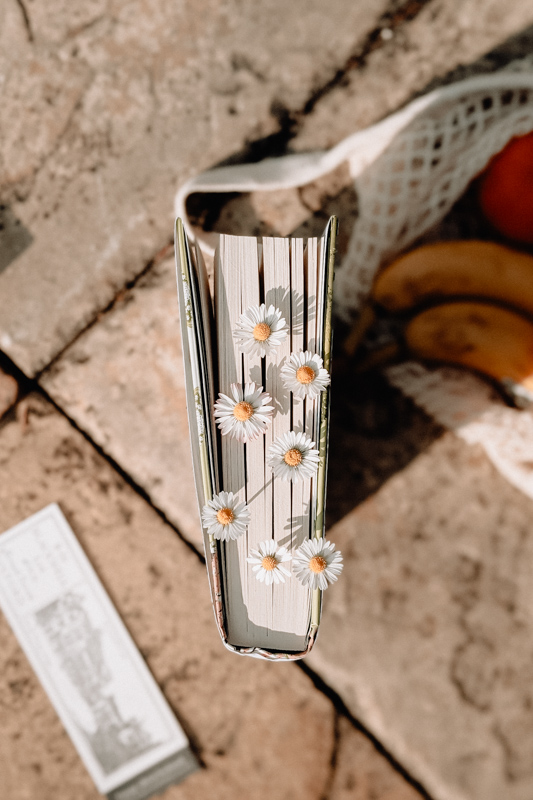
The Books I Read in July 2026
Happy August, my loves!
I come to you from the shores of Bali, where I am for a family holiday with Eddie. I’ve been here before, so I’m glad of a few days spent reading beside a pool and hopping out to the odd warung in search of nasi goreng to bring back in a plastic bag. It’s been a really long time since I’ve enjoyed a proper ‘beach break’ holiday – I’m a notorious adventurer and itinerary-packed city-breaker! But, a hectic day job schedule and wedding-planning madness means I’ve been looking forward to this for a while. After two terrible months of reading, I was determined to balance the ratio this July. I started my month with East of Eden and became instantly besotted with it. Then, I picked up my first-ever Barbara Pym, following it up with some beloved Jane Austen. I’m really in my classics era this year, it seems. A colleague and I buddy-read We Love You, Bunny and detested it. We both agreed to pretend Bunny is a standalone. Now, as I perch on a sun bed, I’ve recently started Fyodor Dostoevsky’s The Brothers Karamazov, the perfect big tome for endless days by the pool (and, as it were, for our long-haul flight out here!).


Let’s be bookish friends! Find me on Goodreads, The StoryGraph or Pagebound to see what I’m reading and reviewing in real-time.
July reads
- East of Eden by John Steinbeck
- We Love You, Bunny by Mona Awad
- Excellent Women by Barbara Pym
- Sublimation by Isabel J. Kim (ARC)
- Persuasion by Jane Austen
- Lonely Mouth by Jacqueline Maley (ARC)
August hopefuls
- The Brothers Karamazov by Fyodor Dostoevsky (started in July)
- Water Moon by Samantha Yotto-Yambao (reread)
- Words Are My Matter by Ursula K. Le Guin
- The Little I Knew by Chiara Valerio
- Queenie Is Working On It by Candice Carty-Williams
In review
East of Eden by John Steinbeck
Rating: 5 stars
East of Eden has potential to have been the jewel of my summer. With the Netflix adaptation of this American classic fast incoming, I knew I wanted to finally pick up this Steinback favourite and I am so glad that I did.
At its heart, East of Eden is a character study using the Trask and Hamilton families, holding a mirror up to several Biblical references. You don’t need to have an in-depth knowledge – I certainly didn’t! – but it’d help move the story along. We meet Charles and Adam Trask, brothers who clash in many small ways, raised by a dishonest father who has left them an unimaginable fortune. Charles is jealous and volatile, Adam is naive and more meek. The brothers spend a decade or more going back and forth between closeness and estrangement, and their constant rivalry eventually results in tragedy. From Steinbeck’s sweeping nature writing to his innate ability to bring characters remarkably to life, flaws and all, I am totally impressed. I really enjoyed how completely immersed I was in the Trask brothers and their lives. You feel every moment deeply, something exacerbated when the key antagonist Cathy shows up. I’ve found myself spending hours in my journal, pondering ‘thou mayest/timshel’ and the long-standing question of whether good things really do happen to good people. Then, I’m especially fascinated by Lee, Adam’s Chinese helper, who code-switches throughout the book. The depiction is a little questionable, but it does open up the thought of how identity can be performed. How does Lee wish to be seen in the world, to whom, and why? Needless to say, this sparked an identity question or two in my own mind. Slow and meandering in parts (my favourite!) with some truly brilliant, sweeping descriptions of California’s Salinas Valley, East of Eden was a compulsive, page-turning examination of generational trauma, familial ties, love, rivalry and identity.
We Love You, Bunny by Mona Awad
Rating: 2 stars
Like many Bunny fans, I sorely disliked the sequel. I picked this up despite knowing the mixed reviews, largely because it was in Kindle Daily Deals for 99p. What ensues is the backstory of Samantha McKay’s Bunnies… and it’s not good.
We Love You, Bunny opens as Sam has just published her first novel. On her book tour, her Bunny frenemies kidnap her, furious at how they’ve been portrayed. Now, it’s Sam’s turn to be the captive audience and hear each of the Bunnies’ side of the story. The only problem here is that we didn’t have enough from each of the said Bunnies in the first novel to feel any real connection to them – they simply served as part of a raucous story. Now, it means We Love You, Bunny really dragged and felt repetitive as we run through wild plot lines in a boring manner. I will say that Awad excelled in some incredible one-liners and she did manage to bring some differentiation between each Bunny. But, overall, it didn’t work for me and I had to force myself to finish it (again, I was reading this with my colleagues for our wildly informal book club).
Excellent Women by Barbara Pym
Rating: 4 stars
Baby’s first Barbara Pym! I’ve been looking forward to reading some Pym, especially since 2026 appears to be my year of slowly returning to the classics. Known for her humorous writing that harks to Austen, I picked up Pym’s Excellent Women and had a genuinely great time romping with her excellently defined characters. Her writing is gentle and witty, conversational and sharp, all at the same time. In this book, we meet Mildred, a self-labelled spinster, as she meets new neighbours. It’s a slice-of-life story where we follow Mildred’s often-hilarious train of thought throughout births, deaths, marriages, garden parties, church goings, and beyond. Beyond the vignettes into everyday 1950s life in England, I thought it was a great social commentary on the purpose and worthiness of women that were unmarried, whether by choice or not. Loved it. A great summer read.
Sublimation by Isabel J. Kim (ARC)
Thanks Picador and NetGalley for my advanced reader copy!
Rating: 4 stars
You know me: I love an immigrant story. Especially as a second-gen immigrant myself. Isabel J. Kim’s sci-fi debut is a winning take on the story, imagining a world where immigrants get ‘instances’ when they emigrate abroad. An instance being a version of themselves, spliced between worlds – one remains in their homeland. As somebody that moved abroad in their mid-twenties, this one sung to me in many ways.
We meet Rose and her instance, Soyoung, when their grandfather passes away. Now, Rose must travel to South Korea to reunite with Soyoung. While some instances keep in touch and synchronise their lives in the hopes of one day reintegrating and living life as one person again, Soyoung Rose Kang left home young and never spoke to her other self again. Soyoung, however, craves reintegration and has hatched a plan of her own. Of course, Rose’s characterisation is full of pent-up angst and palpable grief. I really loved the distinction between Soyoung and Rose, and the author does a great job of weaving in the idea of instancing without it feeling too alien. Annoying as the second-person narrative was, I enjoyed this immigrant story so much and raced through it. In fact, the narrative style added an extra parallel of isolation and disconnection. Soyoung’s frustration at being ‘left’ in Seoul and Rose’s quiet grief and fear really shone, and I truly felt the push and pull of being between countries; of being between selves. I also loved this plot for its careful and subtle way of revealing differences between cultures and countries: I’ve read a LOT of immigrant stories, and this felt different in many good ways.
Persuasion by Jane Austen
Rating: 4 stars
After finishing my first Barbara Pym earlier in the month, I then craved some actual Austen. Persuasion arrived on my shelves a few months ago when I found this darling Penguin English Library copy, and so I tucked into it on those balmy July evenings.
Published posthumously, Persuasion tells the story of Anne Elliot and Captain Wentworth, who were once engaged and deeply in love only to have broken off their engagement due to Wentworth’s low status and wealth. Eight years later, Captain Wentworth returns, wealthy and successful, and their paths cross once more. A slow burn romance in its most elegant and classic sense, I loved this Austen, although I wouldn’t label it my favourite. Through sharp character observations (everybody is somebody) and minuscule character traits, Austen creates a persuasive (heh) story of push and pull with a searing social commentary on societal pressures, familial obligatories, social hierarchy and enduring love. It’s Austen’s step away from her usual dry wit and humour that flood this story with a quiet maturity and pensiveness, a proper reflection on what it means to love and to resiliently love through constant pressure. Also, the love letter is G.O.A.T’d, truly.
Lonely Mouth by Jacqueline Maley (ARC)
Thanks Vintage Books and NetGalley for my advanced reader copy!
Rating: 2.75 stars
Matilda and Lara were raised by their dysfunctional mother, Barbara, in an equally dysfunctional setting. Now, as Matilda strikes out on her own working in one of Sydney’s buzziest restaurants with her life tightly on track, half-sister Lara crashes back into town. Touted a novel about sisterhood and secrets, family dysfunction and fine dining, I really wanted to enjoy Lonely Mouth. Instead, its dragged-out setup, endless ED references and slow pace take away the flashes of brilliance. I actually DNF’d this at 21%, but feel I’d read enough to offer this short review.
What was your favourite book from July? And, please share your own monthly bookish wrap-ups in the comments.